我們的服務
寵物護理服務
獸醫服務
其他
Length range : 30-38 cm
Height range : 20-25cm
Weight range : 2.5-5.5kg
Coat : Short coat|short / silky / close-lying|fine / soft / silky with lustrous sheen
Life expectancy years : 10-16
Colors: natural | champagne | blue| platinum | mink | solid | pointed brown|beige.
Activitity Level : High
Origin: Myanmar
Similar Breeds : Burmese | Siamese| Balinese |Snowshoe | Australian Mist Cat | Oriental Short Hair
The breed descends from Siamese and Burmese ancestry and is strongly linked to Wong Mau , brought to America in 1930 and later understood as a natural mink Tonkinese. Modern breed development took shape in the 1950s and 1960s in the U.S. and Canada , with CFA registration in 1982 , championship for mink in 1984 , and pointed and solid colors joining in 2002.
Playful
Affectionate|active|alert|friendly|intelligent|gregarious|outgoing|social|talkative|playful|people-oriented|curious
Requires a lot of attention , high enrichment , climbing spaces , interactive play , companionship and a secure environment
Prefers people and often other cats for company , likes to be involved in household activities , may struggle if left alone for long periods
The Tonkinese is easy to groom. Weekly brushing with a bristle or rubber brush and occasional wipe-downs may help keep the coat sleek and reduce shedding. Bathing is rarely needed unless the cat is being shown. Ear checks , nail trimming and early tooth-brushing habits are also useful.
A balanced diet should match age , activity and overall health. Sources emphasize high-protein nutrition for active cats , portion control to help avoid obesity , fresh water , and dental-supportive foods or treats when helpful.
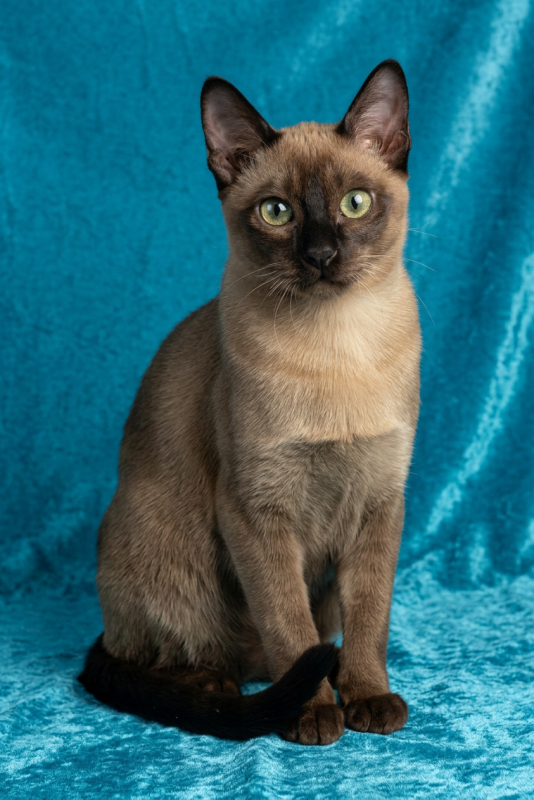
The ideal Tonkinese is intermediate in type , neither cobby nor svelte , with a medium-length muscular torso , firm abdomen , slim legs , proportionate tapering tail , modified wedge head , open almond eyes and a fine , soft , silky coat with lustrous sheen. Balance , alertness and surprising weight are emphasized.
Wong Mau is widely cited as foundational to the breed and the Tonkinese is often described as the happy medium between Siamese and Burmese traits.
Dental disease, Asthma and respiratory conditions, Digestive sensitivity and inflammatory bowel disease, Progressive retinal atrophy, Amyloidosis
1. Bad breath , red swollen or bleeding gums , visible tartar , drooling and pawing at the mouth may occur.
2. Reluctance to eat hard food , chewing on one side , loose teeth , lethargy , weight loss and poor grooming might appear.
1. Chronic dry cough , wheezing and increased respiratory effort may occur.
2. Open-mouth breathing , panting , crouching low , extending the neck , gasping , persistent coughing or noisy breathing might appear.
1. Chronic vomiting , diarrhea or soft stools , weight loss , poor appetite and lethargy may occur.
2. Pica may appear and some cats may show appetite changes during flare-ups.
1. Night blindness may be noticed first.
2. Dilated pupils , increased eye shine , hesitancy in low light and later broader vision loss may occur.
1. Excessive thirst and urination , weight loss , vomiting , lethargy and poor appetite may occur if kidneys are affected.
2. Jaundice , fluid buildup in the abdomen and unexplained fevers might appear if liver involvement occurs.
1. Gingivitis may begin early.
2. It can appear before 1 to 2 years and significant disease may be seen by middle age without intervention.
1. Risk may be very high and some degree of dental disease is likely in life.
2. Severe painful disease may develop without diligent care.
1. It can begin at any age.
2. It is often diagnosed in young adults around 2 to 8 years.
1. Risk may be moderate to high because the breed is considered at higher risk for asthma.
1. Food sensitivities may be present from a young age.
2. Inflammatory bowel disease is more often diagnosed in middle-aged to older cats.
1. Risk may be moderate and digestive sensitivity may be seen in a significant number of cats.
1. Noticeable vision problems typically begin around 3 to 5 years.
1. Risk may be low if responsible breeding and DNA testing are used.
2. Probability depends strongly on breeder testing.
1. It may present in young to middle-aged cats.
2. Clinical signs are often noted around 1 to 5 years.
1. Risk may be low but significant.
2. Probability may depend on family lines because no simple DNA test is described.

1. No specific deficiency is indicated because plaque and inflammation are emphasized.

1. Cobalamin vitamin B12 may be lacking with chronic intestinal disease.

1. No chemical deficiency is indicated because this is described as inflammatory and allergic.

1. No chemical lack is indicated because this is genetic.


+852 6358 3131
香港中環德輔道中84-86號章記大廈9樓01室
週一到週日,早上10點到下午9點
 +852 9160 8619
 +852 9160 8619