我們的服務
寵物護理服務
獸醫服務
其他
Length range : 30-41 cm
Height range : 20-25cm
Weight range : 3.6-5.4kg
Coat : Short to medium-length, soft, silky, fine, yet dense and resilient coat with a distinct ticking pattern and a glowing color. Each hair has dark bands.
Life expectancy years : 9-16 (depends on health situation)
Colors: Ruddy, red, cinnamon, blue, fawn, golden, glowing, ticked shades.
Activitity Level : High
Country: Ethiopia
Similar Breeds : Bengal,Oriental Shorthair
Although the name suggests Abyssinia or Ethiopia, genetic research cited by CFA indicates origins in coastal areas of the Indian Ocean and Southeast Asia with later development in Britain. Cats shown in England included Zula at the Crystal Palace show in 1871. The breed reached the United States in the early 1900s and was among the original CFA registered breeds in 1906. The breed survived major declines in Europe during the world wars through renewed breeding programs.
playful
Busy, active, agenda-driven, affectionate, sociable, super-inquisitive, intelligent, playful, friendly, loving, loyal, energetic, social, relatively vocal, curious, people-oriented.
High activity level, climbing, perches, cat trees, toys, hunting games, and companionship. Indoor and outdoor suitability with supervision and regular interaction.
needs company and does not like being left alone for long periods of time. When well socialized, he is usually affectionate with owners, good with children and other pets, and adaptable to changing environments.
Needs little grooming. Comb or brush a few times per month to control shedding. A chamois rub may improve sheen. Baths are generally unnecessary unless for showing. Regular tooth care is important.
Fresh clean water should be available daily. Activity generally helps maintain weight. No special breed-only nutrition was specified beyond quality cat nutrition and hydration.
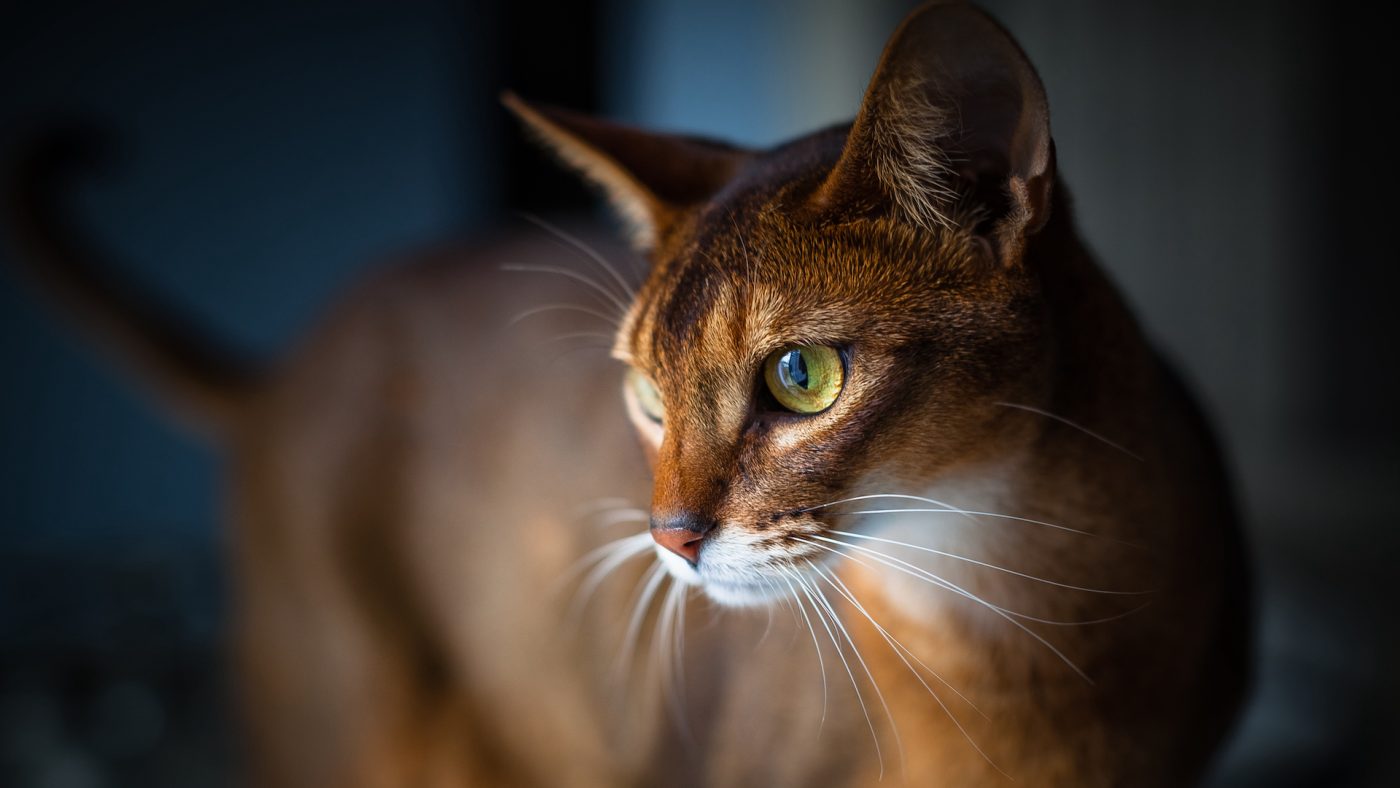
The ideal Abyssinian is a colorful, medium-sized cat with a distinctly ticked coat, a lithe, muscular body, a modified wedge-shaped head, large, alert ears, almond-shaped, expressive eyes, slim, fine-boned legs, and a lively, balanced temperament. It stands well off the ground and appears poised on its tiptoes.
Dental disease / Pyruvate kinase deficiency / Progressive retinal atrophy / Patellar luxation
can cause bad breath, red, swollen, or bleeding gums, and other issues. Tartar buildup, drooling, dropping food, chewing on one side, and hesitation to eat hard food.
lethargy, weakness, and pale gums.
Poor appetite and poor coat quality.
Signs may come and go. Jaundice may occur during a crisis.
can lead to night blindness, dilated pupils, and shiny, reflective eyes. There will have a gradual loss of daytime vision.
intermittent lameness and a skipping gait
The subject experience difficulty jumping, stiffness, and a crouched posture in the hind limbs. It is possible that the leg will kick out and then return to its usual position.
The initiation process can commence within a timeframe ranging from one to two years. This condition is prevalent in cats older than four years if plaque control is not managed effectively.
Very High
The onset of symptoms may occur within six months. However, symptoms may not manifest until over five years old, and there is a possibility of exacerbation during periods of stress or illness.
Low in responsibly bred cats only
typically begins around one and a half to two years of age. The progression to total blindness may take two to four more years.
Low in responsibly bred cats only
may be found in young cats during routine examinations.
Signs may become more obvious with age, activity or arthritis
Moderate

plaque and bacteria are the main drivers

due to genetic disorders
due to genetic disorders

congenital (inherited) anatomical defects or physical trauma
+852 6358 3131
香港中環德輔道中84-86號章記大廈9樓01室
週一到週日,早上10點到下午9點
 +852 9160 8619
 +852 9160 8619