我們的服務
寵物護理服務
獸醫服務
其他
Length range : 28-36 cm
Height range : 20-25cm
Weight range : 2.5-5.4kg
Coat : Semi-long-haired|longhair|medium coat|soft silky fine double coat|agouti ticked|full ruff|plumed tail
Life expectancy years : 9-16
Colors: red|ruddy|blue|fawn|sorrel|cinnamon|lilac|silver.
Activitity Level : High
Origin: Somalia
Similar Breeds : Abyssinian|Burmese|Bengal|Oriental Long Hair|Nebelung
The Somali is the long-haired cousin and descendant of the Abyssinian. Sources describe Abyssinian roots as old and partly uncertain , developed and refined in Britain , later imported to the United States in the early 1900s. Long-haired kittens appearing in Abyssinian lines were eventually developed into the Somali in the mid to late 1960s and the name references Somalia beside Abyssinia , Ethiopia.
Playful
Active|intelligent|playful|affectionate|curious|social|friendly|alert|bold|sweet|gentle|busy|agenda-driven|demanding|independent but friendly
Needs high-level enrichment , climbing frames , hunting games , interactive play , secure outdoor enclosure or cat run , high perches and cat trees
Happiest with company from people or another cat , prefers homes where people are around much of the time , may be stressed by loud busy households
The Somali coat is relatively tangle-free and resists matting. Weekly combing or brushing is commonly recommended , with bathing usually unnecessary unless oily or being shown. Regular coat checks , claws care , vaccination and parasite control are also advised in the text.
Cats are carnivores and need 41 specific nutrients from food. Feeding should match age , lifestyle and ideal body condition. Somalis may have strong appetites and free feeding is not recommended in one source , while fresh clean water , measured feeding , wet or dry preference and enough calories for active cats are emphasized.
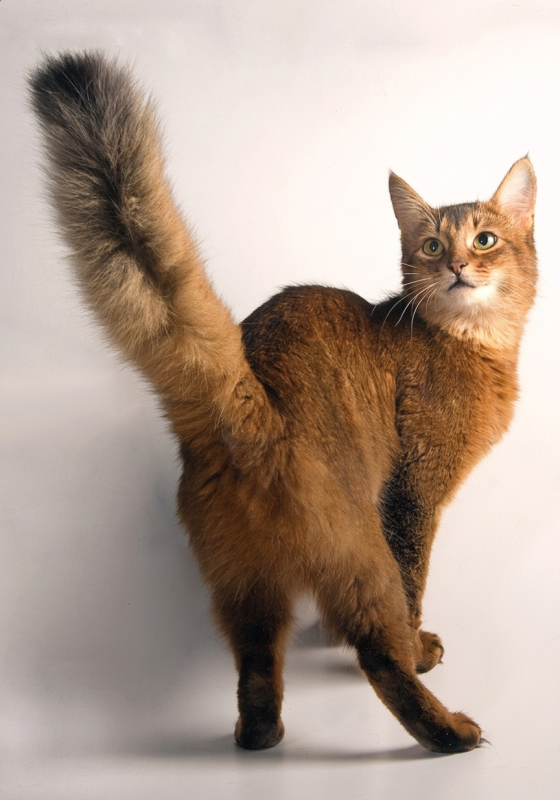
Overall impression is a well-proportioned medium to large cat with firm muscular development , lithe movement , alert lively expression and an even disposition. The head is a modified slightly rounded wedge , ears are large and cupped , eyes are almond-shaped and expressive , body is medium long and graceful , tail is full and brush-like. The coat is very soft , fine , medium length and double coated with warm glowing ticking.
The Somali is the longhaired version of the Abyssinian and is often called the fox cat because of its plumed tail. Despite the name , sources indicate it was named in reference to Somalia beside Abyssinia rather than truly originating there.
Pyruvate kinase deficiency, Progressive retinal atrophy, Feline dental disease, Renal amyloidosis, Patellar luxation
1. Lethargy and weakness may appear in episodes.
2. Pale gums , poor appetite , weight loss , jaundice and an enlarged spleen might appear.
1. Night blindness may appear first.
2. Dilated pupils , increased eye shine , clumsy jumping and later day blindness might develop.
1. Red inflamed gums , halitosis , bleeding gums , drooling and oral pain may appear.
2. Difficulty eating , pawing at the mouth , loose teeth and poor grooming might occur.
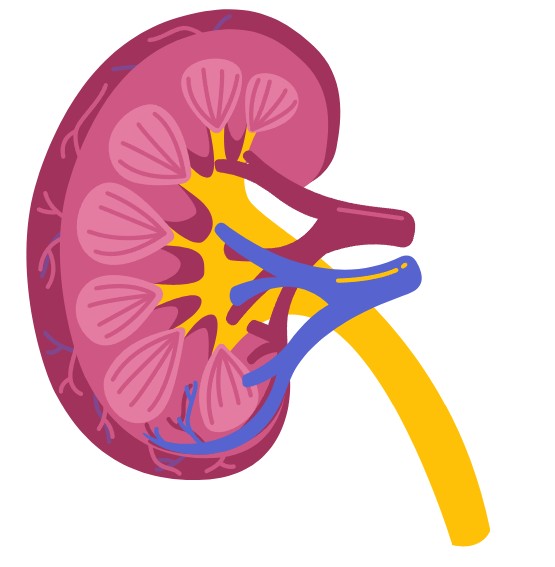
1. Excessive thirst and urination , weight loss , poor appetite , vomiting and lethargy may occur.
2. Poor coat quality and sudden severe decline might occur.
1. Intermittent lameness , skipping gait and reluctance to jump may appear.
2. Severe cases might carry the leg constantly.
1. Signs may appear from about 6 months.
2. They might also first be noticed at 3 to 5 years.
1. Risk may be low with reputable DNA-screened breeding.
2. Risk may be high without such screening.
1. Noticeable vision loss may begin around 1.5 to 2 years.
2. Total blindness might occur by 4 to 6 years.
1. Risk may be low with DNA-screened breeding.
2. Risk may be high without such screening.
1. Gingivitis may appear as early as 9 months to 2 years.
2. Periodontal disease in cats often warrants intervention after 2 to 3 years.
1. Risk may be very high without proactive care.
2. Cats over 2 to 3 years often develop disease needing intervention.
1. It may appear at any age.
2. It is often diagnosed between 2 and 7 years.
1. Risk may be low to moderate.
2. It may depend on line history because simple DNA screening is not available in the provided text.
1. It often becomes noticeable before 2 years in young active cats.
1. Risk may be moderate.
2. Severity may range from Grade 1 to Grade 4.
1. Pyruvate kinase enzyme is lacking.
2. B-vitamins , especially B12 and folate , and iron might be low during anemic crises.

1. No specific deficiency is indicated because plaque bacteria and inflammatory response are emphasized.

1. No nutritional chemical lack is indicated.

1. Potassium and water-soluble B-vitamins may be lost with excessive urination.

+852 6358 3131
香港中環德輔道中84-86號章記大廈9樓01室
週一到週日,早上10點到下午9點
 +852 9160 8619
 +852 9160 8619