我們的服務
寵物護理服務
獸醫服務
其他
Length range : 51-56 cm
Height range : 33-38cm
Weight range : 3.5-11.3kg
Coat : Short coat|short without a heavy undercoat|spotted or boldly marked
Life expectancy years : 17-20
Colors: brown spotted tabby|silver spotted tabby|black|black smoke|snow|blue|dilute colors|marbled or classic pattern.
Activitity Level : High
Origin: United States
Similar Breeds : Bengal|Abyssinian|Chausie|Oriental Shorthair|Maine Coon
The first known Savannah was born on April 7 , 1986 from a domestic cat and an African serval. The breed was developed in the United States in the 1980s , registered by TICA in 2001 and accepted for championship status by TICA in 2012. Early foundation breeds mentioned include Siamese , Egyptian Mau , Oriental Shorthair , domestic shorthair and some lines also used Bengal and Maine Coon.
Playful
intelligent|persistent|curious|active|playful|friendly|loyal|dog-like|attention-demanding|independent but friendly
Needs high-level enrichment , large secure space , climbing structures , puzzle feeders , simulated hunting games , interactive play , routine entertainment and often secure outdoor access or a cat-proofed run.
Needs extensive daily interaction with people and may benefit from a companion animal if suitable. It bonds strongly with family but can be intense , demanding and may not suit homes with small pets or constant unsupervised mixing with other animals.
The Savannah has a short coat and generally needs little grooming. Occasional brushing is suggested with more frequent brushing during shedding and regular nail , ear and dental care plus handling practice is helpful.
This active breed should receive high-quality food matched to life stage and activity. Sources note all cats need animal protein and taurine and the supplied health text suggests some Savannahs do better on high-protein , low-carbohydrate diets with careful monitoring of body condition and fresh water daily.
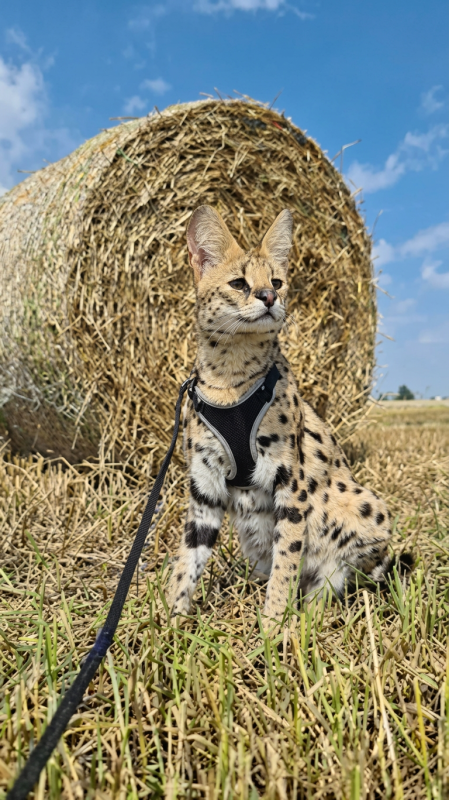
The breed standard describes a tall , lean , graceful and well-balanced cat with striking dark spots or bold markings on brown , silver , black or black smoke backgrounds. It should resemble the African serval in look while being domestic in stature and have an exceptionally long neck , legs , tall ears and a medium-length tail.
Savannahs are known for dog-like behavior such as fetch and leash walking and many enjoy water. Guinness records have included exceptionally tall Savannah cats and first-generation cats may require special legal permissions in some places.
Anesthesia sensitivity, Pyruvate kinase deficiency, Hypertrophic cardiomyopathy, Gastrointestinal sensitivities or IBD, Lower urinary tract disease
1. Adverse reaction during procedures may include respiratory depression , respiratory arrest , cardiac arrest or prolonged difficult recovery
1. Lethargy , weakness , exercise intolerance , pale gums , jaundice and enlarged spleen may occur
1. Many cats may show no early signs
2. Labored or rapid breathing , open-mouthed breathing , lethargy and sudden hind limb pain or paralysis from thromboembolism may occur
1. Chronic loose stools , diarrhea , vomiting , gas , bloating , poor coat condition , weight loss and appetite changes may occur
1. Difficult or painful urination , increased frequency , crying out , blood in urine , inappropriate urination , frequent genital licking and little or no urine with obstruction may occur
1. Symptoms occur immediately upon or during anesthesia administration according to the supplied text
1. High risk especially in earlier generations F1-F3 according to the supplied text
1. Signs can appear at any age from kittenhood to senior years and crises may happen with little warning
1. Low in cats from responsible breeders because DNA testing is available
1. Clinical signs are typically detected in adults around 3-8 years according to the supplied text though progression may be silent for years
1. Moderate according to the supplied text and Cornell notes HCM is the most common heart disease of cats though Savannah is not specifically listed in Cornell’s breed examples
1. Signs may begin in kittenhood during food transition or develop in adulthood and often present around 1-5 years
2. Merck notes IBD average onset around 7 years in cats overall
1. High according to the supplied text because GI sensitivity is described as a common complaint among owners
1. LUTD can occur at any age but is most often seen in middle-aged cats
1. Moderate because Cornell notes overweight , low-exercise , low-water and stressed cats may be at increased risk
1. This is not a nutritional deficiency and reflects intolerance to certain anesthetic drugs

1. This is not described as a dietary deficiency but taurine is noted in the supplied text as essential for feline cardiac health
1. The lacking factor is the functional pyruvate kinase enzyme in red blood cells according to the text

1. The text suggests the problem is often intolerance to ingredients and a diet rich in digestible animal protein and fat may be lacking


+852 6358 3131
香港中環德輔道中84-86號章記大廈9樓01室
週一到週日,早上10點到下午9點
 +852 9160 8619
 +852 9160 8619