我們的服務
寵物護理服務
獸醫服務
其他
— File: american-curl.html —
Length range : 41-53 cm
Height range : 23-30cm
Weight range : 2.3-4.5kg
Coat : Longhair or shorthair , silky , smooth , straight , flat-lying coat with minimal undercoat.
Life expectancy years : 12-16 (depends on health situation)
Colors: white, blue, black, red, cream, chocolate, lilac, silver, golden, tortoiseshell, buttercream, brown, all colors, all patterns.
Activitity Level : Moderate
Origin: United States
Similar Breeds : Turkish Angora, Havana
The breed began in Southern California in 1981 when Joe and Grace Ruga found a stray black female kitten named Shulamith with curled ears. Her kittens showed the trait and helped establish that the curled ear is an autosomal dominant gene. Breeders used domestic shorthair and longhair outcrosses to develop the breed and selective breeding started in 1983.
Gentle
affectionate, people-oriented, gentle, easy-going, adaptable, intelligent, playful, curious, friendly, loving, sociable, calm, energetic, quiet
Needs daily exercise , cat trees , climbing space , interactive play , regular ear care , nail trimming , dental care , indoor attention and companionship.
This breed is highly people-oriented and does not enjoy being left out of household activity. It usually settles well with children , other cats , and cat-friendly dogs and likes being near people even if not always a lap cat.
Because the breed has minimal undercoat , grooming is relatively easy. Combing or brushing two or three times a month may help keep shedding down. Ears need careful cleaning with gentle handling because the cartilage is delicate. Nails should be trimmed and teeth brushed regularly.
Feed a good-quality balanced diet and provide fresh clean water daily. The breed may maintain weight well with enough exercise space , but calorie intake should still be managed to avoid obesity. Canned food may be used as a supplement and treats may be offered in moderation.
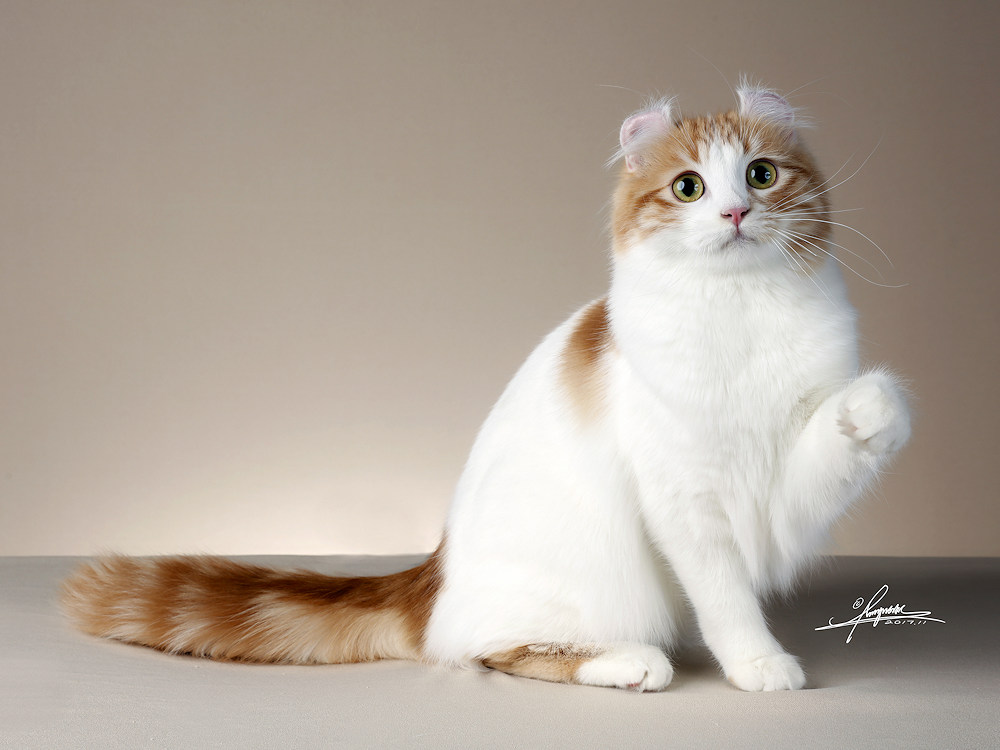
The American Curl standard describes an elegant , well-balanced , moderately muscled cat with a semi-foreign rectangular body , modified wedge head , walnut-shaped eyes , and distinctive ears curling back 90 to 180 degrees with firm cartilage and flexible rounded tips. Females are lighter than males. Both longhair and shorthair divisions are accepted in all colors and patterns.
Ear canal issues , Dental disease , Hypertrophic cardiomyopathy , Obesity , Progressive retinal atrophy
Ear canal issues -> 1. Head shaking , scratching , pawing at ears 2. Dark waxy debris , foul odor , redness 3. Head tilt or sensitivity to touch
Dental disease -> 1. Halitosis 2. Red , swollen , bleeding gums 3. Tartar , drooling , dropping food , chewing on one side , mouth sensitivity
Hypertrophic cardiomyopathy -> 1. Often no early signs 2. Heart murmur or arrhythmia may be detected 3. Lethargy , rapid breathing , open-mouth breathing , decreased appetite , sudden hind limb paralysis from thrombus
Obesity -> 1. Loss of waistline and barrel shape 2. Ribs hard to feel 3. Reduced play , jumping difficulty , poor grooming
Progressive retinal atrophy -> 1. Night blindness 2. Hesitant movement in low light , bumping into objects 3. Dilated pupils , more reflective eyes , progressive day vision loss
Ear canal issues -> 1. May begin in kittenhood 2. Infection signs can appear at any age
High for wax buildup
Moderate for secondary otitis externa if routine cleaning is not performed
Dental disease -> 1. Mild gingivitis may begin around 1 year 2. Some form of disease is common by age 3 without prevention
Very high
Hypertrophic cardiomyopathy -> 1. Can be diagnosed at 1 to 2 years 2. Signs often appear at 5 to 10+ years
Low, risk is similar to the general cat population
Obesity -> 1. Often begins after spay or neuter around 1 year 2. May become significant at 4 to 8 years
High, a common preventable indoor cat condition
Progressive retinal atrophy -> 1. Often begins in young adulthood to middle age around 3 to 5 years 2. Progresses over later years
Progressive retinal atrophy -> 1. Low 2. DNA testing may keep risk very low in responsibly bred lines
Ear canal issues -> 1. The text indicates this is an anatomical air-circulation problem rather than a chemical deficiency

narrow ear canals and excessive wax buildup. Curled-back ears can restrict natural airflow and trap debris, they are highly susceptible to recurrent bacterial infections and yeast overgrowth.

Hypertrophic cardiomyopathy -> 1. It indicates this is primarily genetic 2. Taurine deficiency is linked to a different cardiomyopathy rather than HCM

Obesity -> 1. This is caused by excess calories and insufficient activity rather than deficiency 2. Caloric control and activity may be lacking
Progressive retinal atrophy -> 1. The content indicates this is purely genetic and not due to dietary deficiency

+852 6358 3131
香港中環德輔道中84-86號章記大廈9樓01室
週一到週日,早上10點到下午9點
 +852 9160 8619
 +852 9160 8619