我們的服務
寵物護理服務
獸醫服務
其他
Length range : 33-46 cm
Height range : 25-30.5
Weight range : 3-6
Coat : Long|fluffy|pure white|soft|wavy to ruffled|woolly textured|dense|low-shedding
Life expectancy years : 12-14
Colors: white|pure white.
Activitity Level : Moderate
Origin: Italy
Similar Breeds : Bichon Frise|Coton de Tulear|Havanese|Maltese|Little Lion Dog
The Bolognese likely descends from bichon-type dogs of southern Italy and Malta and was developed in Bologna , Italy. Known since at least the 11th and 12th centuries and tied to ancient Rome , the breed was favored by nobility and often gifted between aristocratic households before later recognition by the FCI in 1956.
balanced, gentle, people-oriented, cuddly, sociable with family, can be shy or aloof with strangers, alert without extreme vocality
calm, faithful, affectionate, docile, playful, easy-going, intelligent, alert, loyal, reserved with strangers, quick learner
daily companionship, mental stimulation, regular grooming, short gentle walks, positive training, weight management, secure home routine
bonds very closely with owners, cannot be left alone for long, can live with other pets when socialized, better with respectful older children or supervised children, good for singles, seniors and families
comb every day, brush every two or three days or more often, professional grooming about every six weeks if kept trimmed, occasional bath or every two to three months, clean face and check tear stains, inspect and clean ears, trim nails regularly
small-breed high-quality food, little and often for toy dogs, measure portions carefully, avoid overweight, fresh water always available, small kibble may help miniature jaws, limit fatty snacks and human food
gentle walks, short strolls twice daily, indoor play, games, mental stimulation
positive reinforcement, early socialisation is a must, basic training helps mental engagement, patience for toilet training, firm yet positive consistency, patient repetitious training, can become fearful without socialization
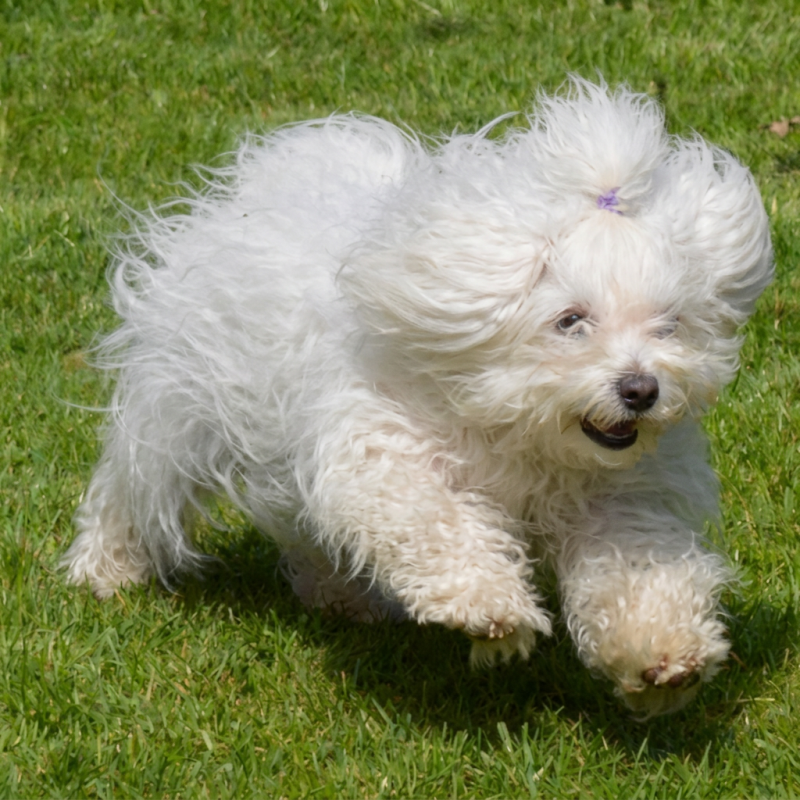
A small , sturdy and square-built companion dog with a long pure-white flocked coat that is ruffled rather than flat. The breed should show a stocky outline , long hanging ears , dark eyes , black nose and a tail carried curved over the back.
The Bolognese was once so prized by European nobility that it was commonly gifted between rulers and appears in artworks by masters such as Titian and Goya.
Patellar Luxation, Legg-Calve-Perthes Disease, Progressive Retinal Atrophy, Mitral Valve Disease, Cataracts
1. intermittent hind-limb lameness / skipping gait and holding the leg up while walking may occur
2. limping / bunny-hopping gait or a cracking sound when the knee is bent might appear
1. gradual hind-limb lameness / thigh muscle atrophy and significant pain during hip movement may occur
2. reluctance to jump might develop
1. dilated pupils / hesitation in low-light conditions and progressive vision loss beginning with night blindness may occur
1. heart murmur / exercise intolerance / persistent cough and rapid or labored breathing may occur
1. cloudiness or a milky pupil appearance / bumping into furniture and visual disorientation may occur
1. often manifests in young adulthood
2. anatomical predispositions are congenital
1. moderate
2. common in many small-breed dogs
1. typically occurs between 5 and 12 months of age
1. moderate
2. a known risk factor in small and toy-sized breeds
1. frequently presents in adulthood
2. often between 3 and 7 years of age
1. moderate
1. typically is diagnosed in middle-aged to senior dogs
1. moderate to high
2. prevalent in small-breed populations
1. can be juvenile when inherited
2. can also be age-related in senior years
1. moderate

1. No specific missing chemical is identified in the provided material.
2. The illness is linked to shallow trochlear grooves and improper skeletal alignment of the hind limbs.
3. The text describes orthopedic misalignment rather than a lacking nutrient or compound.

1. Normal retinal support is lacking because photoreceptor cells progressively degenerate.
2. The provided material links inherited genetic mutations to deterioration of rods and cones in the retina.
3. This can make affected dogs vulnerable to progressive blindness.

1. Normal blood supply to the femoral head is lacking in affected dogs.
2. The provided material links this impaired circulation to bone tissue death and later joint degradation.
3. This can make the hip more vulnerable to collapse and pain.
1. No specific missing chemical is identified in the provided material.
2. The illness is linked to myxomatous degeneration of the mitral valve leaflets over time.
3. The text describes structural valve failure rather than a lacking nutrient or compound.


+852 6358 3131
香港中環德輔道中84-86號章記大廈9樓01室
週一到週日,早上10點到下午9點
 +852 9160 8619
 +852 9160 8619